



Hotels



¿Need help?
We are here to help you!
Call us for free at
08000 211953
Monday to friday (08:00 to 19:30) (GMT+1)
Saturday and holidays (09:00 to 17:00) (GMT+1)

The 20 most useful Mallorcan words and phrases for your trip to Majorca
Elisabeth Blue
-
12/3/25
If there is one statement we can all agree on, it's that you never truly understand a culture until you immerse yourself, even just a little, in its language. In Majorca, that means getting to grips with Mallorcan: the island's own language, heard not only in the markets and in greetings between neighbours, but also in jokes, proverbs, and even on bar menus.
The thought of learning new words might seem a bit of a chore, but this isn't about reciting vocabulary by heart. It's about capturing nuances and being surprised by the reaction of locals when you dare to use one of these Mallorcan phrases.
So, if you want your trip to go beyond the typical tour or the classic photo in front of the cathedral, dare to discover these Mallorcan expressions. They won't just help you find your way or order a good local dish: they will make you feel, if only for a while, a part of authentic Majorcan life. Shall we begin?
Words and phrases of courtesy: greetings and thanks
Let's start with the basics, those Mallorcan phrases that open doors and bring smiles. Majorcans greatly appreciate the effort of those who try to speak a little of their language, so a simple greeting can completely transform your interaction. It's like adding a secret ingredient to your trip. Forget the typical "hola"; here, the game is different, and we're going to teach you the rules so you can score points from day one.
- Bon dia / Bones tardes / Bona nit: The fundamental trio. Use "Bon dia" (Good morning) until lunchtime. Afterwards, switch to "Bones tardes" (Good afternoon). And to say goodbye in the evening or when going to bed, "Bona nit" (Good night). Walking into a small village shop and cheerfully saying "Bon dia!" guarantees you, at the very least, a good conversation. You'll notice many locals also use "Uep!" as a quick, informal greeting, but we'll talk more about that later.
- Adéu: This is the universal "goodbye" and works in any situation. But if you want to add a more personal touch, you can use "Adéu, fins aviat" (Goodbye, see you soon).
- Gràcies / Moltes gràcies: "Thank you" and "Thank you very much." Use them without hesitation. When receiving your change, when they serve you that coffee with milk on a terrace, or when someone holds the door for you. Gratitude is a universal language, and in Mallorcan, it sounds particularly nice.
- De res: The perfect response to a "gràcies." It means "you're welcome" and shows you're following the conversation.
- Per favor: "Please." Essential when asking for anything, from a cold beer to help finding a hidden cove.
It's not about reciting these Mallorcan phrases like a robot, but about understanding their value. A friendly greeting upon entering a wood-fired oven bakery while looking for your ensaïmada or a sincere "gràcies" to the baker can change your day. It's a small gesture of respect that says, "I'm here, and I value your culture." You'll see how people respond with more warmth and willingness, opening doors to a side of the island that many miss.

Phrases for getting around the island: tourist information
Majorca is a maze of secondary roads leading to hidden coves, stone villages, and spectacular viewpoints. Although GPS is a great ally, sometimes the best guide is a local. But how do you ask for directions without resorting to the universal language of gestures? This is where some Mallorcan expressions come into play that will turn you into a first-rate explorer. Imagine being lost in the narrow streets of Alcúdia, searching for that bakery you've heard so much about. With these linguistic tools, no treasure on the island will be out of your reach.
- On és...? (Where is...?): The million-dollar question. It's your master key to finding anything. "On és el mercat de Sineu?" (Where is the Sineu market?). Simple, direct, and tremendously effective. Be prepared for directions that might include references to a "pi gros" (big pine tree) or a "casa amb portons verds" (house with green gates).
- A quina hora...? (At what time...?): Essential for not being left behind. Use it to ask about transport timetables, opening hours for monuments, or museums. "A quina hora surt el bus per anar a Sóller?" (At what time does the bus to Sóller leave?). It will save you long waits in the sun.
- Quant de temps falta? (How much longer?): Perfect for the impatient or for those who plan meticulously. You can use it during a hike or a boat trip to know how much time is left to reach your destination.
- És aprop / És enfora? (Is it near / Is it far?): A simple question to gauge distances. The answer may be subjective, but it will give you an idea of whether you can walk or if it's better to take the car.
- Puc anar-hi a peu? (Can I walk there?): Combine this phrase with the previous one to confirm if the distance is manageable for a walk.
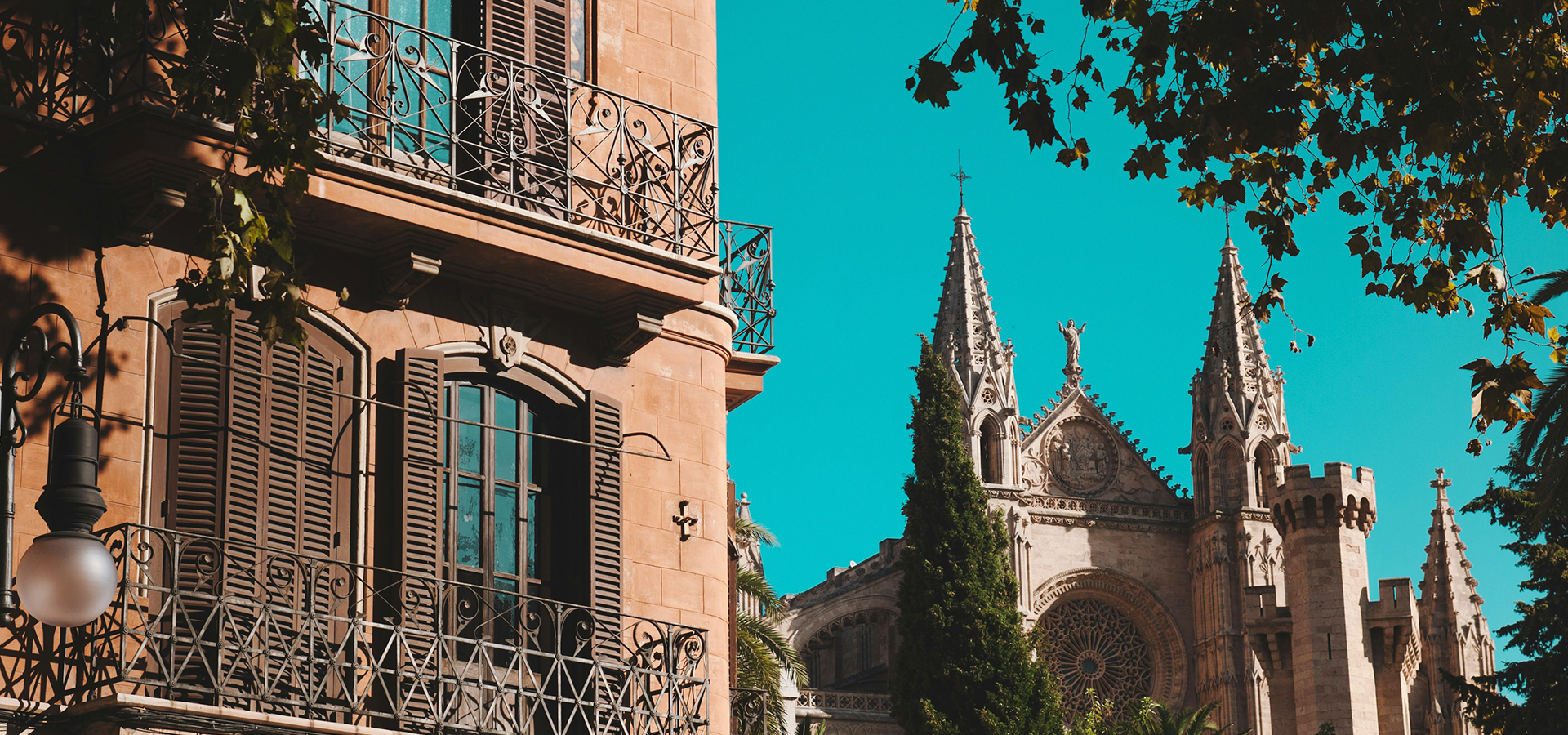
Confidently asking "On és la Seu?" will not only help you get to Palma's cathedral but will also elicit a positive reaction. You will see how locals go out of their way to help you, sometimes even walking with you part of the way.
Words and phrases for consumption: shopping and prices
Now for one of the best parts of any trip: eating and shopping. Majorca is a paradise of local markets, charming shops, and terraces where you can enjoy the cuisine. To navigate this territory with ease, you need the right vocabulary. Knowing how to ask for the bill or a price in Mallorcan is not only practical but will also make you feel part of the atmosphere. Mastering these Mallorcan phrases is your opportunity to interact, discover local products, and, why not, get a good price for that little something you want to treat yourself to.
- Quant val? / Quant és?: Both mean "How much does it cost?" or "How much is it?". These are the key questions for any transaction, from a piece of fruit at the Inca market to a pair of espadrilles in a shop in Palma.
- Voldria... / Vull...: "I would like..." or "I want...". The first is a bit more formal ("Voldria un cafè amb llet" - I would like a coffee with milk), while the second is more direct ("Vull això" - I want this). Both are perfectly acceptable. You can point to something and say, "Vull això, per favor."
- El compte, per favor: "The bill, please." The phrase you need to end a good meal. Say it with confidence, and the waiter will know you're ready to continue your journey around the island.
- És massa car: "It's too expensive." A phrase to use with a playful smile at markets, especially if you're buying crafts. It can sometimes open the door to a small discount, but use it respectfully.
- Puc pagar amb targeta?: "Can I pay by card?". Although common nowadays, in some small markets or village bars, cash is still king. It's a useful question to avoid surprises.
Try using these Mallorcan expressions in a local market. The vendors will appreciate your interest in their language and might tell you the origin of their products or give you a tip on how to cook them.

Typical Majorcan things: food, objects, and more
Now that you know how to greet, get around, and shop, it's time to get down to business: the food and local treasures. Majorca has its own vocabulary for its culinary delights and most emblematic objects. Each term has a story behind it, a flavour, or a tradition that accompanies it. Get ready to expand your Mallorcan dictionary with these essentials.
- Pa amb oli: Literally, "bread with oil." But it's much more than that. It's an institution. It consists of a slice of brown country bread, rubbed with a ramellet tomato, a good drizzle of olive oil, and salt. You can ask for a "pa amb oli amb formatge" (with cheese) or "amb pernil" (with ham). It's the perfect dinner or snack, simple and delicious.
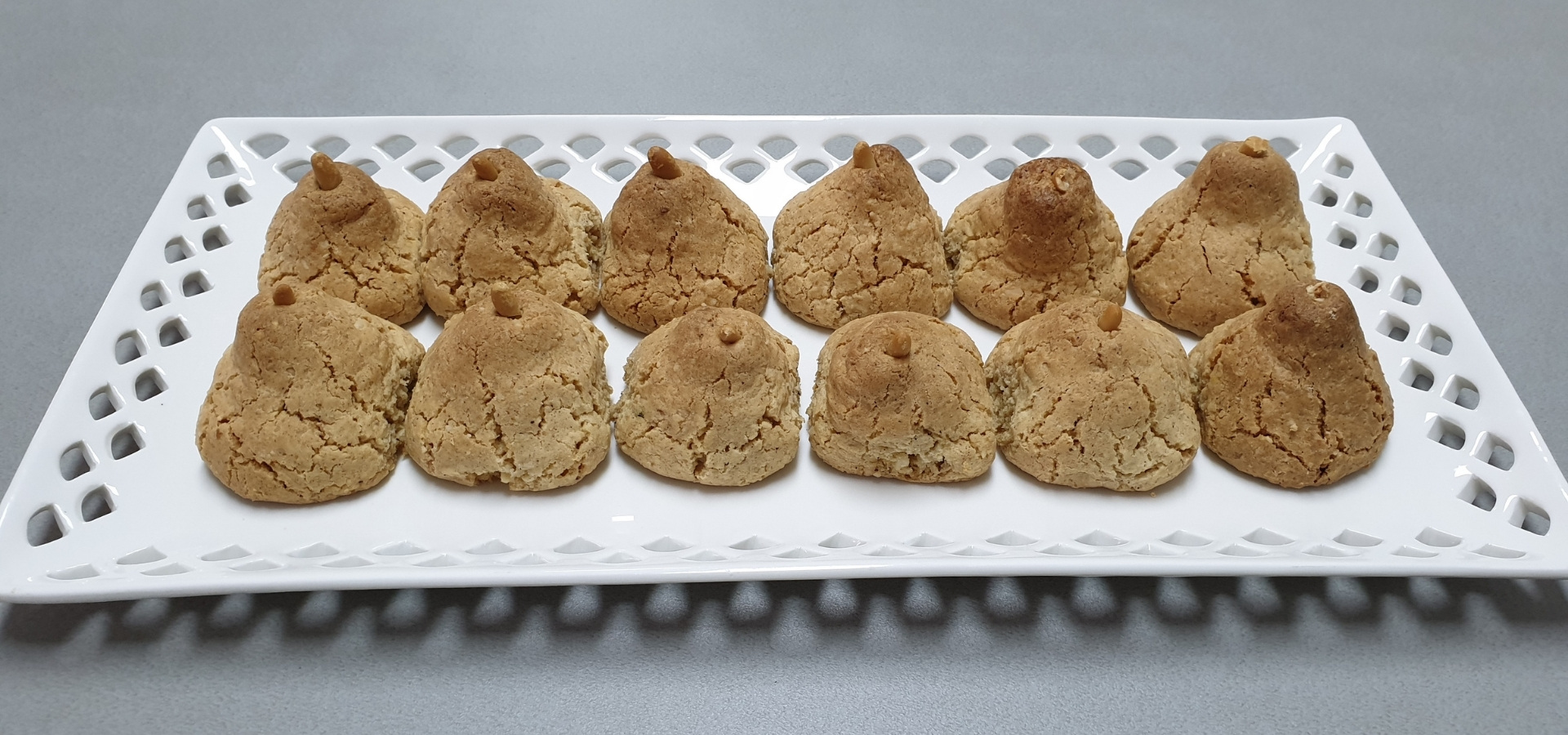
- Ensaïmada: The queen of Majorcan pastry. This spiral-shaped sweet, dusted with icing sugar, is an almost obligatory souvenir. They come "llisa" (plain) or filled with "cabell d'àngel" (a sweet pumpkin filling), cream, or chocolate. Ordering an "ensaïmada de tall" (a slice) with a coffee is a ritual.
- Siurell: This curious white clay figure with touches of green and red is one of the symbols of the island's craftsmanship. It represents various characters and has a built-in whistle. Its origin is a mystery, but it is believed to have ancient roots. You'll find siurells in any craft market; they are a souvenir full of history.
- Sobrassada: The Majorcan cured sausage made from pork and paprika, which has a spreadable texture and an unmistakable flavour. You'll see it hanging in delicatessens, and it's a key ingredient in many local dishes.
- Trempó: A fresh and simple salad, ideal for hot days. It contains tomato, white Majorcan pepper, and onion, all finely chopped and dressed with oil and salt. The coca de trempó, a baked dough with this mixture on top, is another delicacy you can't miss.
Purely Mallorcan expressions: the soul of the language
If you want to make the leap from tourist to initiate, here are some gems of local speech, those Mallorcan expressions that are the very soul of the island. They are words and phrases you will hardly hear outside of Majorca and which, at first, might leave you a bit puzzled. However, once you understand them, you realise they perfectly capture the calm, practical, and slightly witty character of the Majorcans. Using them (or at least recognising them) is like getting a secret code that gives you access to a deeper level of island life. Pay attention, because these expressions are the definitive touch to sound like a true expert on the local culture.
- Idò: The ultimate multi-purpose word. If Mallorcan were a Swiss army knife, "idò" would be the main blade. It can mean "well," "so," "of course," "okay," or simply serve as a filler to start or end a sentence. You will hear it constantly. An example: "- Fa molta calor i vull estrenar el meu nou banyador" (- It's very hot and I want to wear my new swimming costume) "- Idò podem anar a sa platja" (Well, we could go to the beach).
- Uep!: More than a greeting, it's an exclamation. It's the equivalent of a "What's up?" or a friendly "Hey!" thrown out when you cross paths with someone you know. It's informal, friendly, and very common in the villages. If you're walking down a quiet street and cross paths with someone, a "Uep!" accompanied by a nod of the head is the perfect greeting.
- No passis pena: "Don't suffer" or "don't worry." This phrase perfectly sums up the island's philosophy of life. It's used to play down an issue, to reassure someone about a problem, or simply to say "don't stress." If you miss the bus, it's very likely a Majorcan will tell you, "No passis pena, ja en vendrà un altre" (Don't worry, another one will come along).
- Què en som de ruc!: A fun expression for when you mess up. It literally means "What a donkey I am!". It's a form of self-criticism with humour, very typical of the local character.
- Sus Mallorca!: An exclamation of encouragement and pride. It's like saying "Come on, Majorca!". You'll hear it at sporting events or during moments of community celebration.
These Mallorcan phrases are small windows into the way of life of its people. Dare to let out a "Uep!" when you enter a village shop or an "idò" to show agreement and watch the reaction. You'll feel, for a moment, part of the place.
Dare to speak Mallorcan and discover the island in a different way
Now you have a small treasure in your pocket: the keys to unlock a different Majorca. Learning a few Mallorcan expressions is a gesture that brings you closer to the people, their culture, and their way of life. From confidently ordering a pa amb oli to letting out a friendly "Uep!" when you cross paths with someone on a country lane, every word you use will build a bridge and bring a smile. These small interactions are what transform a good trip into a memorable adventure.
So, leave your shyness in your suitcase and go for it. It doesn't matter if your pronunciation isn't perfect; what counts is the attempt and the desire to participate. And what better place to start practising than with us. When you come to Hotels VIVA, dare to greet us with a "Bon dia!" or say thank you with a resounding "Moltes gràcies". We'll be delighted to hear you and continue the conversation.
Fancy trying out a few of these Mallorcan phrases on your next trip? We look forward to seeing you!

Post Relacionados



Your happiness is our reward

Best online price

Discount on future stays

Discount at Balneum Spa

Discounts on room upgrades
